

Why Connection Still Drives Business
For years, I thought success meant getting a seat at the table.
You’ve probably heard the phrase before. Get a seat at the table. Be in the room. Know the right people. Build your network. Gain access.
The more time I’ve spent in business, the more I’ve realized something: the table isn’t the goal. In fact, many of the most important conversations don’t happen at the table at all.
They happen before the meeting, after the meeting, over dinner, during a project tour, or at a small gathering where nobody is trying to sell anything.
In the construction industry, I’ve often joked that very little business is actually done on the trade show floor. The trade show is simply the meeting place. The real conversations happen at breakfast, on the rooftop, over drinks, in a hospitality suite, or during a dinner with a handful of people who genuinely want to be there.
That is where trust is built. That is where relationships are formed. That is where opportunities begin to emerge.
Construction has always been a relationship business. For all the technology, software, AI, and innovation entering the industry, people still work with people they trust. They hire people they know. They refer people they believe in. That hasn’t changed.
What has changed is how those relationships are formed.
For decades, many industries operated on a relatively predictable path. Join the association. Attend the meetings. Show up consistently. Build your reputation. Eventually, you would earn your place. To some degree, that still matters.
But we are no longer operating in the same environment that built many of those systems. The next generation of leaders is entering the industry with different expectations. Companies are competing for talent in ways they never have before. Employees are looking for more than a paycheck. Clients have more options than ever. Information is everywhere, and attention is increasingly difficult to earn.
Yet many organizations continue relying on the same playbook they have used for decades. The same events. The same networking formats. The same sponsorships. The same conversations. Then we wonder why engagement feels harder than it used to.
Gallup’s 2026 State of the Global Workplace report found that only 20% of employees worldwide are engaged at work. One in five report feeling lonely. At the same time, research continues to point to belonging, meaningful relationships, and shared experiences as some of the strongest drivers of engagement, retention, and organizational loyalty.
To me, that suggests we are not facing an information problem. We are facing a connection problem.
The challenge is not simply getting people into a room. The challenge is creating an environment where they actually want to participate once they are there.
Because attendance and engagement are not the same thing.
Someone can attend every event on the calendar and still feel disconnected. Someone can sit through every presentation and never build a meaningful relationship. Someone can be invited to the table and still not feel like they belong there.
And the truth is, nobody wants a seat at a table where they are not valued. What people want is to be part of something worth showing up for.
That is why I believe organizations need to think differently about engagement. Not as an event strategy. Not as a marketing strategy. Not even as a networking strategy. As a relationship strategy.
Because the organizations that will thrive over the next decade will not necessarily be the ones with the biggest budgets or the loudest voices. They will be the ones that create the strongest sense of connection. The ones people want to belong to. The ones people want to participate in. The ones people talk about after they leave.
The truth is, we are not reinventing connection. We are remembering it.
We are remembering that people want to feel part of something. That stories travel farther than advertisements. That experiences create stronger relationships than transactions. That belonging matters.
And if we are going to ask people to spend their time with us, the one thing they can never get back, we had better give them something worth remembering.
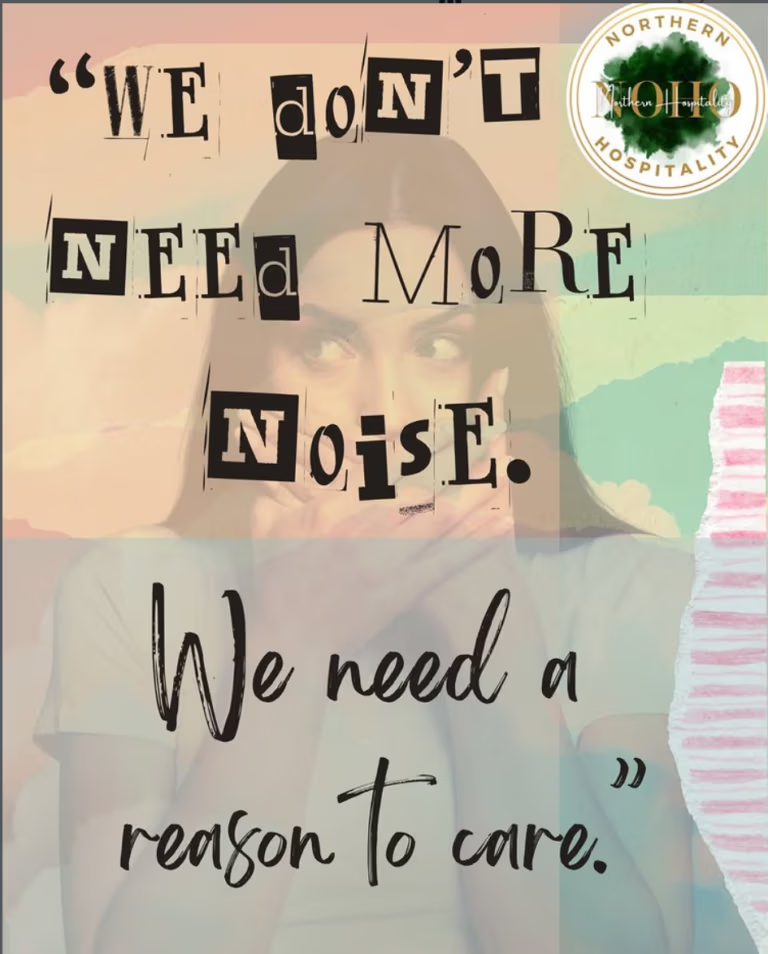
Because at the end of the day, we do not need more noise.
We need a reason to care.